|
7. SOCIALISM AND SOCIOLOGY
What are your views on socialism and sociology?
I am an independent thinker, not aligned to political creeds or academic specialism. I am neither a socialist nor a sociologist. Nor am I a conservative, to mention a British political tradition to which I am an alien.
Socialism is differently defined, e.g., British socialism, Marxist socialism. This subject does not always have much relation to sociology, which is an academic pursuit. There are currently several conflicting schools of interpretation in sociology. It is still an open question as to what the ultimate version will be. The arguments continue, but without changing anything, as if insulated from the rest of society.
I have always cultivated a respect for sociology. However, I have been sad to find that this discipline is frequently just as career-oriented as other academic departments, creating barriers against outsiders. By comparison with a citizen philosophy, sociology is caste.
My paternal grandfather was an Irishman who served in the British navy during the First World War. He lived in Yorkshire; his ancestors were Irish peasant farmers who did not view the ruling British with affection. After the war, he shared in the economic slump that hit the north of England. Unemployment was rife. He constantly worked an allotment to grow his food. He was an illiterate Roman Catholic who laboriously taught himself to read and write, until he had mastered the Bible. He rejected that work, becoming a Marxist under the pressures of poverty. He read the Das Kapital of Karl Marx, which he regarded as the new bible for the working man. He eventually moderated his views as an independent thinker. I do not subscribe to Marxism.
Meanwhile, the local Catholic priests singled out my grandfather for opprobrium; a leading ecclesiastic went to his home and conducted a ceremony of excommunication that did not refrain from cursing him and his family. His wife, still a Roman Catholic, was deeply shocked by this event. He thereafter scorned Roman Catholicism. He was also averse to the British upper class and their lax social scruple.
This same grandfather was a staunch participant in the hunger marches that moved down to London during the 1920s and 30s. Most of those marches were backed by the National Unemployed Workers Movement. Many of the men who joined those treks had fought in the Great War. Now they were thin from malnutrition. These unemployed frequently wore ragged clothes; some had string in their shoes instead of bootlaces. Even the middle class were often unaware of working class poverty, while the upper class was so typically aloof from everything except immediate enjoyments of the day. Silver teapots and fancy jewellery, while the poor could easily contract skin diseases and lice. The unemployed had to get secondhand clothing from pawnbrokers; they scoured junkyards for basic possessions. Garbage was used to light fires in the winter.
The refrain of some depressed men like my grandfather was: “We fought in your war (against the Germans), we won it for you, but now you do nothing for us.” They were addressing the British government and the “blue bloods,” i.e., royalty, who were not always in favour as icons of aloof capitalism.
My father had to forego his rightful place at a college in order to help support the large family he had inherited. He went to work at a steel foundry in Middlesbrough. The factor that freed him from this unwanted commitment proved to be more undesirable. When the Second World War developed into the conflict with Japanese aggression, he responded to the patriotic enlistment campaign of the British government. Now so many of the British working class were again being recruited for the war effort. They were indispensable after all. Too many of them never came back.
My father volunteered for the RAF while still in his teens. He afterwards found himself fighting the Japanese “do or die” neo-samurai in the jungles of Burma. He was unprepared for the ferocity of that conflict. He saw too many dead bodies, including those of Japanese soldiers who committed suicide with hand grenades rather than surrender. For different reasons, the British combatants dreaded capture because of the atrocities occurring in prisoner of war camps. When he got out of that grim war, my father became a builder after marrying my English mother. During the early 1950s, he was engaged in repairs to some of the colleges in Cambridge, this activity being his only link with the academic life he had earlier lost in the imposed career for survival.
Two generations later, the British are predominantly an affluent race in no danger of conscription or malnutrition. They are part of the much promoted “increased standards of living,” which include credit cards. Members of less fortunate countries have been anxious to share in the benefits. On close inspection, British society is riddled with problems such as crime, drugs, and a declining police force. Hooded adolescent killers have shot down victims in broad daylight. My views on crime and delinquency may be found in chapter 14 of Pointed Observations (2005). See also citizen sociology on this website.
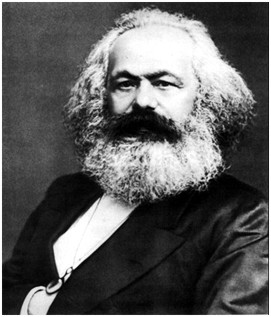
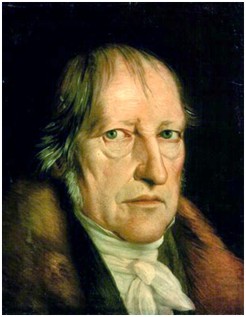
l to r: Karl Marx, Georg W. F. Hegel
When some people ask about socialism, they actually mean Karl Marx (1818-1883). Sometimes described as a philosopher, Marx is more generally regarded as an economist and a contributor to sociology. Born in Germany, he arrived in Britain in 1849, where he spent the rest of his life. He is celebrated for his partiality to the Reading Room at the British Library. His major commitment was to economics. His Das Kapital was published in 1867 in Germany; that was actually only the first volume, the last two (edited by Engels) being published after his death. Unlike the Professors of his day, Marx studied without an academic income; he lived in relative poverty in London. He had been well educated in Germany; however, his hostility to religion is said to have curtailed his academic prospects. His parents were Jewish converts to Lutheranism.
The sub-title of Das Kapital was Critique of Political Economy. His friend Friedrich Engels described the book in terms of "the political economy of the working class, reduced to its scientific formulation." In this connection, the biography by Engels (1869) refers to the history of factory regulation in England, which "has now reached the point of limiting working hours in nearly all manufacturing or cottage industries to 60 hours per week for women and young people under the age of 18, and to 39 hours per week for children under 13."
At Paris in 1843, Marx began mixing with working class people for the first time. He was shocked by their poverty. Formerly, he was a middle class intellectual isolated from the workers. Now he described himself as a communist, believing that the working class would become the emancipators of society. Marx employed Hegelian dialectic to describe his encounters in Paris. His sense of affinity with the workers is admirable; he was undeniably committed to their improvement. Problems are discernible in the ideology attending this development.
Marx is well known for his opposition to Georg W. F. Hegel (1770-1831), the German academic philosopher who stressed the subject of Geist, a word often translated (perhaps inadequately) as “Spirit.” Marx assimilated many of Hegel’s concepts, awarding these a rigidly materialist connotation, thus conflicting with his predecessor’s "Idealist" orientation. German Idealism is not beyond criticism. Hegel has been accused of glorifying the Prussian monarchical state, an angle associated with the conservative "Right Hegelians" who succeeded him. Whereas the contrasting "Left Hegelians" (including Marx) believed that the ideal society had yet to be achieved.
The works of Hegel are notorious for difficult verbiage and the different interpretations awarded them. His philosophy has an underlying Christian complexion, of an unorthodox kind which Marx described as pantheistic. I do not concur with either Hegel or Marx in my worldview. Both Hegelian dialectic and the dialectical materialism of Marx (and Engels) have problems well known to diverse critics. The claim of Marx to a socialist science of history was fraught with setbacks in future historical events of the kind associated with Stalin.
Marx believed that his version of socialism was scientific. Indeed, he called his theory “scientific socialism.” Critics say that what he and his colleague Friedrich Engels actually created was a doctrine of class struggle, a theme reflected in their Communist Manifesto (1848). The application of the word scientific tended very much to impart a dogmatic flavour to subsequent Marxist victories.
The successors of Marx believed that rival ideologies were unscientific, and therefore something to be easily dismissed. A spirit of authority and intolerance marked many aspects of Russian Communism. Numerous dissidents were sent to grim labour camps; this trend paved the way for purges enforced by the Stalinist regime. Events were not transpiring in the way that Marx had predicted. A process of revisionism was applied to his theories. Dictatorships and failing economies severely contradicted the belief in a scientific socialism.
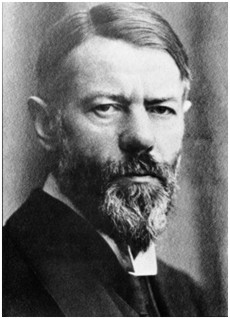
Max Weber
Meanwhile, Max Weber (1864-1920) was far ahead of Marx in the study of religions. A German Professor of economics, Weber is regarded as one of the founders of sociology. Religion was one of his major interests. In 1907, a financial inheritance enabled him to live thereafter as a private scholar. Max Weber investigated Protestant Christianity and Judaism, also Chinese and Indian religions. These diverse researches spurred the formative "sociology of religion." His famous work The Protestant Ethic and the Spirit of Capitalism (1904-5, trans. 1930) revealed how Protestant codes contributed to the affluence of Western civilisation. Weber affirmed that the French theologian John Calvin (1509-64) permitted clergy to employ their assets profitably. He concluded that Calvinism influenced the development of capitalism. His account is considered incomplete, being contested on some points.
Weber also wrote (in German) The Religion of China: Confucianism and Taoism and The Religion of India: The Sociology of Hinduism and Buddhism. In the former work, he mainly focused upon the early period, and neglected chronology. In the latter work, he concluded that the caste system of Hinduism had prevented the growth of capitalism in India. In contrast, his Ancient Judaism awarded the Hebrew religion an importance in the development of Western religion and society (cf. the version of Eric Voegelin). Weber's main interest was in Judaism and Christianity; his version of Chinese and Indian religion is of limited use today, save perhaps as a guide to his own conceptualism. A relevant introduction is Reinhard Bendix, Max Weber, An Intellectual Portrait (1977), which refers to Weber's "frequently crude German nationalism" (page 10).
Weber's version of Hinayana Buddhism is considered pedestrian by more recent scholars of that subject, who have access to far more materials. His comparisons with Roman Catholicism and the Jesuits are out of focus. The early Buddhist monks were prohibited any possession of money; Weber assumed that such observances had little impact on lay morality. He complains that for the laity, there was neither confession nor church discipline, neither lay brethren nor tertiaries (The Religion of India, trans. H. H. Gerth and D. Martindale, Free Press 1958, pp. 218-19).
Precisely the absolute extra-worldly character, the cultlessness of the monks, and the lack of any kind of planned influence on life conduct of the laity, must have pushed the lay piety increasingly in the direction of hagiolatry and idolatry of Mahayana sects. (The Religion of India, p. 222)
According to Weber, early Buddhism persisted in an unstructured state resistant to uniformity, leading to sects and heresies. The spirit of capitalism was absent in early Buddhism, which may be reason for recommendation.
Max Weber advocated wertfreiheit or "value-freedom" in relation to science. This means that social science must be free from value judgments. The subtleties of this matter have been debated, including the value associations of middle class German nationalism.
Beyond a certain point, value neutrality in science can be detrimental to necessary values for human life, as in the sphere of ecology, which definitely does inspire a set of values conducive to international survival.
Weber's concept of science was also very much in the modern Western idiom of uniqueness. The singularity of Western civilisation was a dominant theme in his work, and it is arguable that his study of Eastern civilisations was merely supplementary and not co-existent. Weber emphasised that only the West had developed a growth economy, an experimental science, a technology based on science, a rational law, a lofty political structure (the modern State), and even musical harmony and orchestration. He found it an artificial accomplishment one is relieved to find, but the total units of his analysis were arguably in substantial disarray. (Shepherd, Meaning in Anthropos, 1991, p. 103)
Weber was preoccupied with charting distinctive elements of Western civilisation. The “values” of other religions and civilisations were at risk of compression. Scholarly knowledge of Chinese religion, Hinduism, and Buddhism has increased substantially since Weber’s day. Not all of this data is easily arrayed under Weberian categories such as social stratification. However, this issue is perhaps a sideline by comparison with the pointers found in climate science, so strongly resisted by contemporary industrial enterprises. Capitalist value judgments are a doubtful index to global wellbeing.
The insights of Marx into the industrial capitalism of Europe were not matched by his version of "Asiatic despotism." Weber was much more objective about religion, but again there are drawbacks in evidence. |