|
4. ON PAUL K. FEYERABEND
What are your views on science?
I have frequently aligned myself with a scientific perspective. However, my priorities are in philosophy. My first book was an essay on the history of science. I subsequently formulated an unofficial "science of culture" in an early manuscript published several years later (Meaning in Anthropos, 1991). The essay, Psychology in Science, conflicted in the closing pages with the relativism expressed by Paul K. Feyerabend (1924-1994), a philosopher of science who had created a strong academic controversy in this respect. I argued for method against Feyerabend’s “anything goes.” This was considered unusual for a writer outside the academic career zone.
I believe in a form of empiricism such as the Club of Rome furthered, i.e., discovering what is actually happening, as distinct from what is commonly believed. Science is often delimited by pedantic arguments from one quarter, while another camp have become reckless in disavowing all “method,” leading to the postmodernist situation of “anything goes,” in which many distractions have been let loose for the unwary. I am not a rigid processualist, but far less am I a new age subjectivist. The controversy surrounding Feyerabend can illustrate some contrasts in the assessment of science.
Scientific discovery does not always occur when or where this is expected. As in the instance of ecology, the achievement can take time to seep through into consensus validation.
To illustrate one aspect of my contention: the method involved in the ecological research was intense, but the general reception of findings was discrepant with empirical priorities and relevant validation. In his relativist argument, Feyerabend missed the crux of the ecological method in process during the 1970s. So did many other academics and far too many politicians.
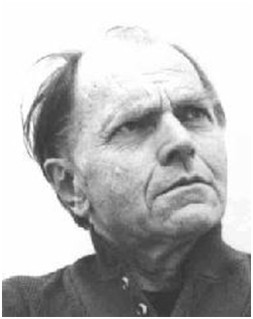
Paul K. Feyerabend
In deference to Professor Feyerabend, he knew that the “closed ranks” tendency of academe was no answer to human needs. Nevertheless, I believe that his “grassroots” recipe was out of focus. He was reputed to take up both sides of an argument in contrasting papers, as though each side was equally valid. This approach is associated with his Philosophical Papers (2 vols, 1981). That strategy ran the risk of appearing superficial, which was my own verdict. However, Feyerabend is more famous for promoting an epistemological anarchy. He became known as the “anti-science philosopher,” maintaining that the rationality of science is a myth. He caricatured science in terms of “anything goes.” Scientific discoveries have often been resisted by establishment science, a notable fact in itself. The relativist counter was nevertheless flippant in resort to such measures as the aesthetic Dadaist strategy.
Born in Vienna, Feyerabend was originally a student of Karl Popper (d.1994), another Austrian. He later refuted Popper’s critical rationalism, moving at an acute tangent while he taught at the University of California from 1959. His provocative book Against Method (1975) was translated into nineteen languages, a fact which dismayed some critics. Feyerabend’s sequel to his anti-method bombshell was Science in a Free Society (1978), which some assessors regarded as being even more anarchistic. In this book he advocated a situation in which all traditions have equal rights. The nature of some traditions was here problematic, including alternative therapy. Feyerabend is noted for being partial to "new age" concepts which he encountered during his lengthy residence in California until the 1980s.
His conclusion that 'objectively' there may be nothing to choose between the claims of science and those of astrology, voodoo, and alternative medicine, as well as his concern for environmental issues ensured that he was a hero of the anti-technological counter-culture (Stanford Encyclopaedia, accessed 30/11/2011).
The relativist free society aroused different forms of response, including my own comments at the end of Psychology in Science (1983). From a citizen standpoint, I defended "method" against the anarchism of “anything goes.” My retort was considered by some approving academic analysts to be one of the most pointed expressions of riposte visible in this problem sphere. Indeed more so than the standard Popperian reflections and even the rebuttal contributed by Marvin Harris, the advocate of cultural materialism, who was no fan of Paul K.
My standpoint was (and is) that environmental issues are in a completely different category to voodoo and alternative medicine. The imposition of commercial therapy on the "new age" clientele still affords ample scope for due warning. Problems in physics will not be solved by horoscopes. Objections to commonsense and citizen indignation were stupefying in some academic sectors affiliated to the "new age."
One new age academic accused me of misinterpreting the anti-science exponent, the implication here being that Feyerabend was ushering in a glorious new era without science or barbed wire academic exclusionism, and where factors like Jung would reign supreme. Sadly, the barbed wire fence continues to be erected against non-academics even by new age academics, as some recent documents have attested (here basically meaning the Scientific and Medical Network and their allies known as the Alister Hardy Trust). All you have to do is disagree with them, and the new age barbed wire emerges. I am not a Jungian.
The subtitle of Against Method was quite graphic in stating Outline of an Anarchistic Theory of Knowledge. Professor Feyerabend told his readers that the epistemological anarchist “has no compunction to defend the most trite or the most outrageous statement,” and that his aims “remain stable, or change as a result of argument, or of boredom, or of a conversion experience, or to impress a mistress” (Against Method, p. 189). In other words, such an anarchist is a creature of mood, and would be less likely to distinguish between truth and falsity.
Such considerations emerged in my further comments on the epistemological anarchist (The Resurrection of Philosophy, 1989, pp. 45-51). “The answer is to educate them (the public), and not to confuse the public milieu even further by a tolerance towards all idiocies and social bruises and expenses” (ibid., p. 50). However, I also commented that “much of Feyerabend’s plea (whether serious or no) for a grassroots democracy is commendable from a serious point of view” (ibid., pp. 47-8). His version of democracy was hindered by postmodern relativism, in which falsity can easily be mistaken for truth.
A later work of Feyerabend bore yet another provocative title, namely Farewell to Reason (1987). Relativism was again advocated as a means of solving social or ideological problems. Some problems will not solve other problems. The autobiography of Paul Feyerabend is entitled Killing Time (1995). This has been considered revealing.
The anti-science philosopher convinced many of his readers that he was not really leading them “by the nose” in a deceptive exercise of superficial logic. Deception was his underlying accusation against the critical rationalism of his former mentor Karl Popper. A citizen is not obliged to believe that either of these celebrities exercised the appropriate means of "doing philosophy," to use an academic phrase.
The "postmodernist" orientation is strongly associated with an aspect of Feyerabend’s reasoning. This orientation frequently believes that there is no universal standard of truth. Instead, an argument is made that worldviews are determined by the culture in which they are expressed.
My own view is that a universal standard of truth does exist. Much confusion is caused by empiricist technological science, which has not so far charted the mental world of humans. Academic philosophy is similarly at a disadvantage, leaving any citizen thinker with the option of a tangent. There are some in that citizen category who choose a type of relativism, and others who adopt a form of neo-Hegelian metaphysical cosmology (e.g., Ken Wilber). There are various claims to spiritual expertise, while alternative therapy is another component. I do not believe that such approaches are the solution, but rather a hindrance.
My recourse, as a citizen philosopher, was to bypass the relativist tactic, adopting an interdisciplinary approach which attempted to chart a “science of culture” on different lines to those found in conventional social science, academic philosophy, and popular thought. This formulation of a citizen version of anthropography is ongoing. I now call this a philosophy of culture (or philosophical anthropography).
Culture is an elastic word meaning different things to different assessors. Culture is generally reduced to technological clichés epitomised by “increased standards of living” or a “wide range of choice.” That commercial option may merely amount to the casual selection of television channels, which might all be showing crass forms of entertainment at the same time.
Media distractions are evidently one reason for the pervasive confusions. Even the relatively obvious ecological situation has been distorted. There is no hope of clarity with regard to metaphysics in a relativist world, where the most tangible problems are unresolved. The British government have proved inept in countering crime, and educational standards are widely said to be falling. The facts of ecological drawback are global, but still widely neglected by politicians, whose version of science is so often a slave to economic considerations. The current situation amounts to a severe instance of “anything goes.”
Professor Feyerabend was an obvious feature of discrepancy in the academic landscape; there are other less profiled matters causing confusion. Conflicting views exist, nominally sharing a similar scientific status. For instance, scientists who promoted the early ecological arguments were opposed by scientists who maintained that those arguments were alarmist. Some of the opposing scientists were in league with the oil companies exercising vested interests in minimising the ecology probe. This situation was ongoing for decades, only surfacing on the media at a later stage, by which time the planet was severely damaged. |